Understanding the Moon’s Phases
The moon, Earth’s natural satellite, has captivated humans for centuries. Its phases are a result of its orbit around our planet and the way sunlight reflects off its surface. On July 27, 2025, the moon is 3 days old and in the Waxing Crescent phase, with only 9% of its surface illuminated. This phase marks the beginning of the moon’s cycle, where it gradually becomes more visible as it moves away from the sun.
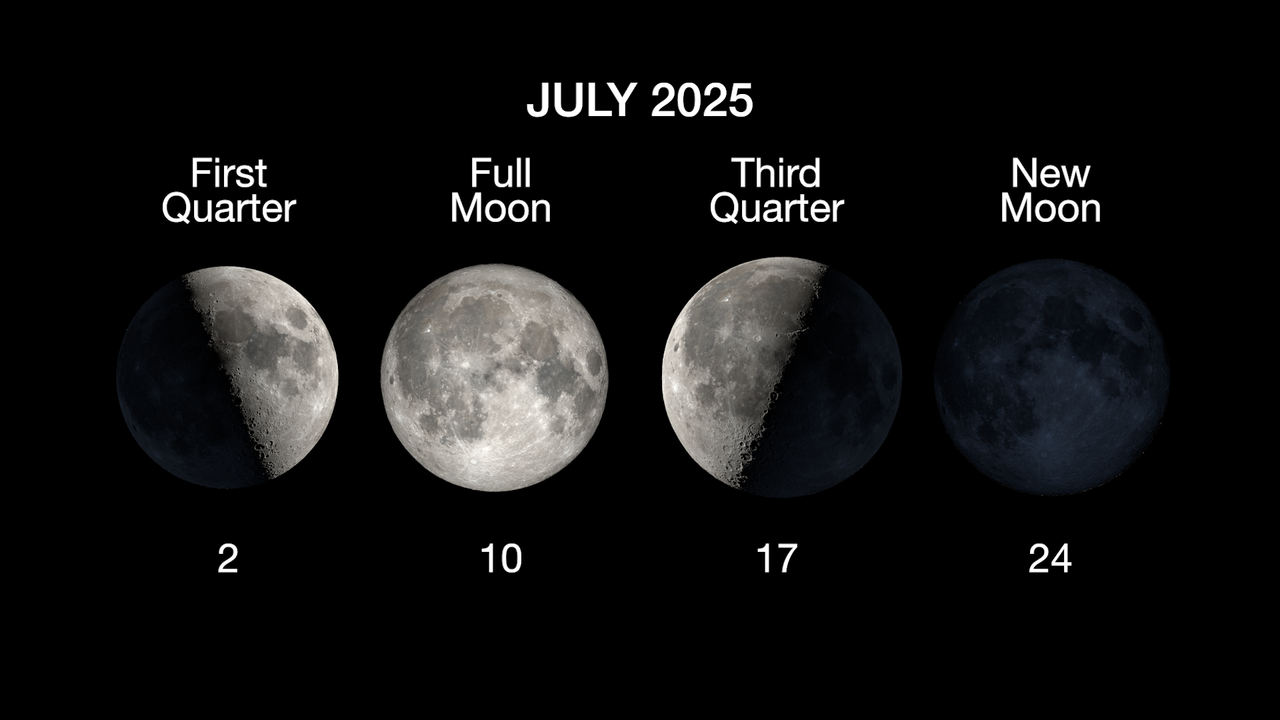
The Lunar Cycle
As the moon orbits Earth, it goes through eight distinct phases, each representing a different portion of its illuminated surface. These phases include:
- New Moon: The moon is positioned between Earth and the sun, so the side facing us receives no direct sunlight.
- Waxing Crescent: A thin sliver of the moon becomes visible as it moves away from the sun.
- First Quarter: Half of the moon’s surface is illuminated, marking the midpoint of the waxing phase.
- Waxing Gibbous: More than half of the moon is illuminated, but it is not yet full.
- Full Moon: The entire face of the moon is illuminated, as it is on the opposite side of Earth from the sun.
- Waning Gibbous: The illuminated portion begins to decrease after the full moon.
- Last Quarter: Half of the moon is illuminated again, but this time it is the waning half.
- Waning Crescent: Only a small sliver remains illuminated before the cycle starts over.
These phases occur approximately every 29.5 days, forming what is known as a lunar month.
August 2025 Moon Phases
For those interested in tracking the moon’s movements, here are the key phases for August 2025:
- First Quarter: August 1
- Full Moon: August 9
- Third/Last Quarter: August 16
- New Moon: August 23
Each of these milestones offers unique opportunities for observation. For instance, the First Quarter Moon rises around noon and sets at midnight, making it an ideal time for evening stargazing.
The Science Behind the Moon Phases
The moon does not emit its own light; instead, it reflects sunlight. As it orbits Earth, we see different portions of its illuminated side depending on its position relative to the sun. This creates the illusion of changing shapes, which are the moon’s phases.
Giuseppe Donatiello, an Italian amateur astronomer and astrophotographer, explains that the phases are a result of the moon’s motion around Earth and its alignment with the sun. He notes that the moon’s rotation is synchronized with its orbit, meaning we always see the same side.
The Impact of Moon Phases
Moon phases have been used for timekeeping since ancient times. They also influence natural phenomena such as tides. When the moon is in a New or Full Moon phase, the gravitational pull of the sun and moon combine, resulting in higher tides. Conversely, during the First and Last Quarter phases, the tides are lower due to the opposing forces of the sun and moon.
Additionally, the timing of moonrise and moonset changes daily. The moon rises about 50 minutes later each day, which means its visibility shifts throughout the night. This pattern affects when and where the moon can be observed.
Resources for Moon Watching
For those eager to explore the moon further, there are numerous resources available. NASA’s SkyCal Events Calendar provides detailed information on lunar and solar eclipses, as well as other celestial events. There are also guides on how to photograph the moon and capture lunar eclipses, which can be helpful for both beginners and experienced astronomers.
If you’re looking to enhance your viewing experience, consider using telescopes or cameras designed for astrophotography. These tools can help you capture the intricate details of the moon’s surface and its changing phases.
Conclusion
Understanding the moon’s phases not only deepens our appreciation of the night sky but also connects us to the natural rhythms of the universe. Whether you’re a casual observer or a dedicated astronomer, the moon’s ever-changing appearance offers endless opportunities for discovery and wonder.