Cowboy Bebop
is often hailed as one of the greatest anime of all time, renowned for its deep characters and excellent action scenes. However, the series’ true origins had nothing to do with any of that; instead, it was created with one cynical goal: to sell spaceship toys.
Cowboy Bebop
first debuted in 1998 in Japan, and didn’t make it over to the US until a few years later. The brainchild of Shinichiro Watanabe,
Cowboy Bebop
was the first work that Watanabe directed, although it would be far from the last. Having gained experience working on
Macross Plus
and
Visions of Escaflowne
, Watanabe was originally given only one directive when it came to planning a new original series: “as long as there will be spaceships, you can do what you want.” Watanabe took that direction very literally, and thus,
Cowboy Bebop
was born.
Quick Links
-
Cowboy Bebop’s Origin Was Selling Toys
- The Series Was Given Little Guidance Aside From Including Spaceships
-
Cowboy Bebop Defied the Odds
- Bebop Came Close to Cancellation Halfway Through
-
Cowboy Bebop Did End Up Selling Models After All
- The Series’ Success Eventually Led to Models Being Created
Cowboy Bebop’s Origin Was Selling Toys
The Series Was Given Little Guidance Aside From Including Spaceships

Cowboy Bebop
was initially sponsored by the toy division at Bandai, and they really did give Watanabe carte blanche to create the new series as he saw fit. However, when the test footage came in, it was clear that the show Watanabe was creating wasn’t actually suited to an audience that would be buying a lot of toys.
As a result,
Cowboy Bebop
was shelved, and it seemed like the series might never be released.
However, at some point, word of
Cowboy Bebop
had spread to another division of Bandai, Bandai Visual, who agreed to step in and fund the rest of the series, allowing
Cowboy Bebop
to be released.
Given the original premise of
selling toys, the spaceships in
Cowboy Bebop
had to be very cool-looking. Watanabe hired Kimitoshi Yamane, a young up-and-coming mecha designer, to help design the ships and machines seen in the series, including the
Bebop
itself. Yamane is known these days for his industrialized designs, based heavily on real machines like ships, planes and tanks. Yamane would later contribute some plot ideas as well, coming up with the plot for episode #19, “Wild Horses,” which features the Space Shuttle Columbia alongside his spaceship designs.
It was always Watanabe’s intention to appeal to adults as well as teenagers with
Cowboy Bebop
. The show dealt with some difficult topics that made it unsuitable for children, like terrorism and drug use, which were a big part of what made it unsuitable for Bandai’s needs at first. It’s extremely fortunate that someone else in Bandai saw value in the project, or fans may never have had the chance to watch
Cowboy Bebop
at all.
Cowboy Bebop Defied the Odds
Bebop Came Close to Cancellation Halfway Through
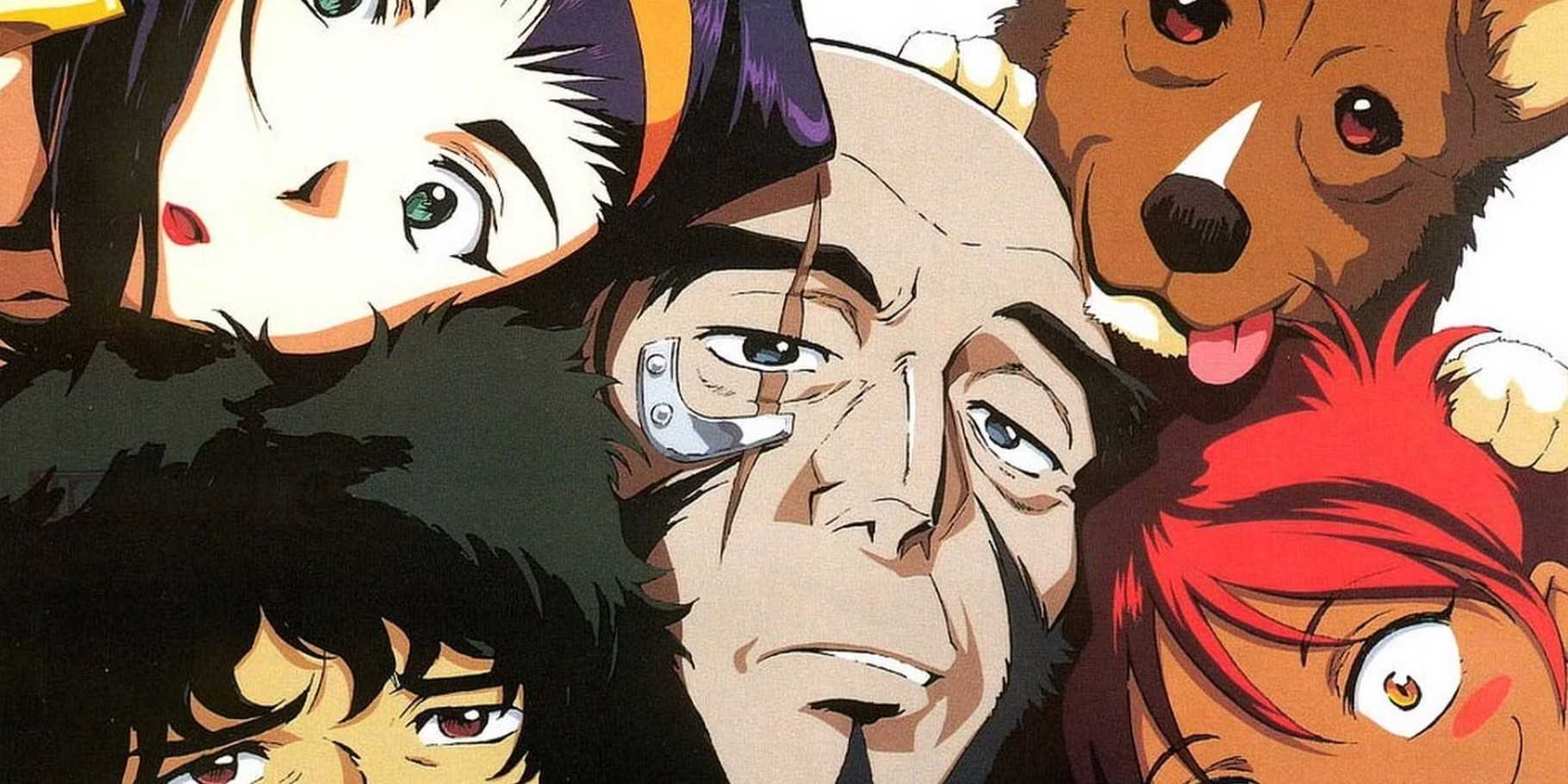
Watanabe had worked on many other projects before
Cowboy Bebop
, but had little creative freedom, leading him to grow frustrated and begin thinking about what he would do on his own project. The project that would become
Cowboy Bebop
was greenlit based entirely on circumstances, however.
As Watanabe said in a Forbes interview
, “The timing for
Cowboy Bebop
was when
Star Wars
was coming back with
The Phantom Menace
. That meant Bandai thought another
Star Wars
boom was likely on the way and spaceships would be key. So they wanted to sell new plastic models of original spaceships.”
Thus, in a strange way,
Cowboy Bebop
owes its existence to the
Star Wars
prequels.
Thus, in a strange way,
Cowboy Bebop
owes its existence to the
Star Wars
prequels
. Watanabe did take the demand for spaceships seriously, and held a contest for designs, ultimately choosing Kimitoshi Yamane’s due to them not only being cool, but believable and realistic as well.
Cowboy Bebop
ended up launching Yamane’s career, leading to him working on a great number of other major series, including
Gundam
, although Yamane often says he prefers working on non-humanoid robots and machines rather than the traditional human-shaped mecha.
When
Cowboy Bebop
‘s fate was hanging in the balance, the series created a make-shift ending, cobbling together a clip show out of already animated footage and previously seen footage that was accompanied by voiceover from the characters, musing on their life philosophies. This lost episode, known as “Mish-Mash Blues,” could’ve represented the end of the series, but thanks to Bandai Visual, the series was allowed to end properly. It’s certainly incredible how many times this series came close to oblivion, only to emerge stronger than ever.
Cowboy Bebop Did End Up Selling Models After All
The Series’ Success Eventually Led to Models Being Created
While
Cowboy Bebop
didn’t end up with a lot of contemporary toys when it was airing, as was originally planned, the series did end up moving some models and toys of the spaceships from the series.
Cowboy Bebop
‘s enduring popularity eventually led to the creation of models based on the ships in the series, many of which were extremely popular among fans
. While it may have been far later than anyone originally anticipated,
Cowboy Bebop
has sold and continues to sell models of its ships to this very day.
Fans will no doubt be surprised to learn that the origins of
Cowboy Bebop
were so centered around profit, as the actual series definitely presents itself as a piece of art first, and a franchise second. The use of music, the writing, and the design of both the characters and the world helped to create a tone unlike any other anime series out there. With its heavy Western influences,
Cowboy Bebop
was a fusion of cultures and histories
, something that ultimately made it that much more successful at portraying a future where such lines are blurred.
Cowboy Bebop
may not have been the toy seller that Bandai had hoped for back in the 1990s, but the series’ enduring success has made its mark far beyond just the toy industry. Merchandising will always be an important consideration when making anime, even anime aimed at older audiences, as they also enjoy collecting objects related to their favorite series.
Cowboy Bebop
merchandise, including ship models, are still commonly found today, and there aren’t many series who can make the same claim over 25 years after release.